
The smell of blackberries bubbling in a cast iron pot is one of those camp smells that stops conversation. Everyone just looks at the pot. It’s the kind of dessert that turns a simple evening into something memorable — and it doesn’t require a campfire or a single coal.

This blackberry cobbler cooks entirely on a camp stove, using a Dutch oven. The trick is a small wire rack or a handful of clean pebbles placed in the bottom of the pot. That simple barrier lifts the berries off the direct heat, so the filling stays juicy without scorching. The biscuit topping browns evenly from the steam trapped under the lid.
Why This Method Works
Most camp cobblers rely on a fire’s coals for bottom and top heat. That’s fine when you have a fire going, but it’s tricky to manage. Too many coals and the bottom burns. Too few and the topping stays doughy.
Using a camp stove gives you precise control. The heat comes from below, and the lid traps steam to cook the top. The wire rack or pebbles create an air gap that prevents the berry juice from caramelizing directly on the pot’s floor. That’s the secret to a cobbler that doesn’t taste like burned sugar.
What You Need
A 10-inch Dutch oven with a flat lid works best. The flat lid lets you stack a few coals on top if you want extra browning, but it’s not necessary. A camp stove that can hold the pot’s weight and maintain a steady medium-low flame is essential. I use a two-burner propane stove, but a single-burner works fine as long as it’s stable.
For the berries, fresh or frozen both work. If using frozen, don’t thaw them first. Add them straight from the bag and add an extra tablespoon of cornstarch to compensate for the extra liquid. The cook time will be about five minutes longer.
The Assembly
Start by tossing the blackberries with sugar, cornstarch, lemon juice, and a pinch of cinnamon. The cornstarch is key — it thickens the berry juices as they heat, giving you that jammy texture instead of a thin syrup. Let the berries sit while you make the biscuit topping.
The topping is a simple drop biscuit dough. Keep the butter cold. Cut it into the flour mixture until it looks like coarse meal, then stir in the milk and vanilla just until combined. Overmixing makes the biscuits tough, and tough biscuits are a letdown after that first whiff of berry steam.
Place your wire rack or pebbles in the bottom of the Dutch oven. Pour in the berry mixture. Drop the biscuit dough in six even spoonfuls on top — don’t spread them. They’ll expand as they cook.
Cooking on the Stove
Cover the pot and set it on the stove over medium-low heat. You want a gentle bubble, not a furious boil. Cook for 20 minutes, then rotate the lid a quarter turn. This evens out any hot spots on the stove. Cook for another 15 minutes.
If the topping isn’t as golden as you’d like, you have two options. Move the pot to a cooler burner and let it sit covered for five more minutes, or carefully place a few lit briquettes on the lid if you’re cooking near a fire. I usually just let it rest off the heat for five minutes — the residual steam finishes the job.
Let the cobbler rest for five minutes before serving. This lets the filling set up a little, so it doesn’t run all over your bowl.
Adapting for Weather and Conditions
On a windy day, the camp stove flame can flicker and create uneven heat. Set up a wind screen — a piece of foil bent into a U-shape around the stove works well. Just leave the top open for ventilation.
If you’re camping with kids, let them help with the berry tossing and dough mixing. The hands-on part is quick, and they’ll be more excited to eat something they helped make.
For cooler evenings, the cobbler holds its heat well in the Dutch oven. Wrap the pot in a towel or an empty sleeping bag to keep it warm for up to an hour after cooking.
Safety Note
Never leave a camp stove unattended while cooking. Keep the area clear of flammable materials — tent walls, sleeping bags, and dry leaves. When you’re done, turn off the stove completely and let the pot cool before handling. Store leftover cobbler in a sealed container in your cooler, and clean the Dutch oven as soon as it’s cool enough to touch.
Takeaway: The best camp desserts don’t need a fire. A camp stove, a Dutch oven, and a simple barrier between berries and heat give you a juicy blackberry cobbler every time. That first spoonful, with the warm berries and soft biscuit, is worth every minute of the wait.
Frequently Asked Questions
Can I use frozen blackberries for this cobbler?
Yes, frozen blackberries work well. Do not thaw them first — add them frozen to the Dutch oven and increase the initial cook time by 5 minutes. Keep in mind that frozen berries release more liquid, so you may want to add an extra tablespoon of cornstarch to the filling.
What if I don’t have a Dutch oven?
You can make this cobbler in a heavy-bottomed pot with a tight-fitting lid, or even in a foil packet set near the coals. The key is even heat distribution. If using a regular pot, place a heat diffuser between the pot and the camp stove to prevent scorching.
How do I keep the cobbler from burning on the bottom?
The trick is to create a heat barrier. I place a small wire rack or a few clean pebbles in the bottom of the Dutch oven before adding the filling. This lifts the berries off the direct heat. Alternatively, cook the cobbler on a low flame and stir the filling once halfway through.
Can I make this cobbler ahead of time and reheat at camp?
Absolutely. Cook the cobbler at home, let it cool completely, and store it in a sealed container in your cooler. To reheat, place the cobbler in a Dutch oven over low heat for 10-15 minutes, stirring gently once or twice. Add a splash of water if the filling seems too thick.
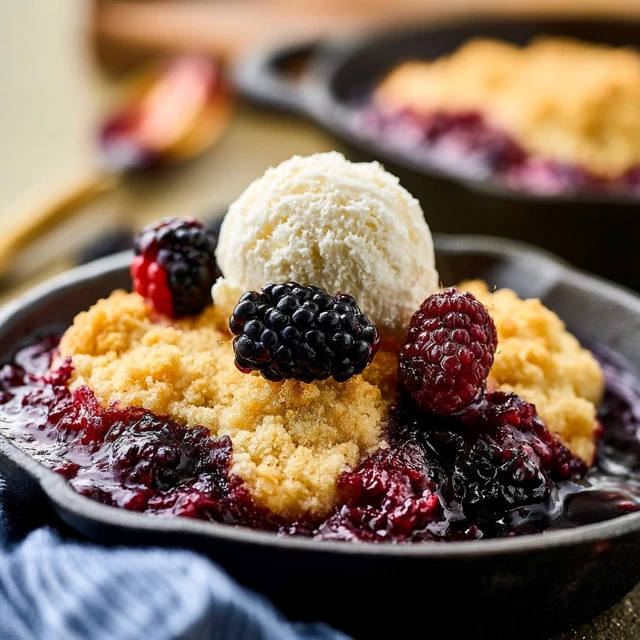
Juicy Blackberry Cobbler: Camp Stove Dutch Oven Recipe
Ingredients
Method
- In a medium bowl, gently toss the blackberries with 1/2 cup sugar, cornstarch, lemon juice, and cinnamon until evenly coated. Set aside.
- In a separate bowl, whisk together the flour, 2 tablespoons sugar, baking powder, and salt. Cut in the cold butter using a pastry cutter or your fingertips until the mixture resembles coarse crumbs.
- Stir in the milk and vanilla extract just until a soft dough forms. Do not overmix.
- Place a small wire rack or a few clean pebbles in the bottom of a 10-inch Dutch oven. Pour the blackberry mixture into the Dutch oven.
- Spoon the biscuit dough over the berry filling in 6 even dollops. Do not spread it out — it will expand as it bakes.
- Cover the Dutch oven with its lid and place it on a camp stove over medium-low heat. Cook for 20 minutes, then rotate the lid a quarter turn to redistribute heat. Cook for another 15 minutes, until the topping is golden and the filling is bubbly.
- Remove the Dutch oven from the heat and let it rest for 5 minutes. Serve warm, directly from the pot.