
The first time I baked muffins at a campsite, I ended up with a sad, soggy mess that tasted more like wet cardboard than anything resembling breakfast. The berries had bled into the batter, the bottoms were scorched, and the tops were raw. It was a hard lesson, but it taught me the one trick that turns campfire muffins from a gamble into a guaranteed crowd-pleaser: flour the berries first.

This blackberry muffin recipe is built for the outdoors. It uses simple ingredients you can pack in a single bag, requires no special equipment beyond a campfire or a portable stove, and bakes in individual foil packets so there is no shared pan to wash. The result is a tender, golden muffin studded with jammy pockets of blackberry that hold their shape without turning the whole thing purple. Let me walk you through the method.
Why This Technique Works
The biggest challenge with baking berries at camp is moisture control. Blackberries are fragile and full of juice. If you stir them into the batter directly, they burst open and release liquid that makes the muffin dense and soggy. The flour coating creates a thin barrier around each berry. It absorbs surface moisture and helps the fruit stay suspended in the batter instead of sinking to the bottom. The flour also thickens the juices as the muffin bakes, creating little pockets of concentrated berry flavor rather than a wet streak.
Gear and Setup
You do not need a Dutch oven for this recipe, though it works beautifully if you have one. The foil packet method is more forgiving and uses less fuel. For the fire, let it burn down to a bed of glowing coals—no flames. Flames create hot spots that scorch the outside of the packet before the inside is done. If you are using a camp stove, set it to medium-low and place the packets on a cast iron griddle or directly on the burner grate. A pair of long-handled tongs is essential for rotating and removing the packets.
Foil Packet Assembly
Use heavy-duty aluminum foil. Regular foil tears too easily on coals. Cut each square large enough to fold over the batter with a little room for expansion—about 8 by 8 inches works well. Lightly grease the center of each square with butter or a neutral oil so the muffin does not stick. Spoon the batter into the center, then fold the foil into a tight packet, crimping the edges twice to seal. Leave a small air pocket at the top so the muffin can rise without bursting the foil.
The Berry Prep Step You Cannot Skip
After you mix the dry and wet ingredients separately and combine them just until no streaks of flour remain, take a moment to toss the blackberries with that extra tablespoon of flour. Use your hands gently—the berries are delicate. Fold them into the batter using a spatula, using as few strokes as possible. Overmixing at this stage activates gluten and makes the muffin tough. A few streaks of flour in the batter are fine; they will disappear during baking.
Baking Over the Fire
Place the sealed foil packets directly on the hot coals, not in the flames. If you are using a grate, set the packets on the grate about 4 inches above low coals. Cook for 18 to 22 minutes, rotating each packet a half turn halfway through. This ensures even heat distribution. If you are using a camp Dutch oven, preheat it with coals, then arrange the packets on a trivet or directly on the lid (inverted) inside the oven. Use 6 to 8 coals on top and 4 to 5 underneath. Bake for 20 to 25 minutes. The muffins are done when a skewer inserted into the center comes out clean or with a few moist crumbs.
Common Mistakes and How to Avoid Them
- Batter too wet: If your berries are very ripe or frozen, they release extra juice. Tossing them with flour helps, but also consider reducing the milk by one tablespoon.
- Burning the bottoms: Coals that are too hot will scorch the foil. If you see black smoke or smell burning, lift the packets off the coals and let the fire cool down for a few minutes before continuing.
- Muffins not rising: Overmixing the batter or using old baking powder are the usual culprits. Test your baking powder at home by dropping a teaspoon into warm water—it should fizz vigorously.
Adapting for Different Conditions
On a windy day, the fire will burn hotter and less evenly. Place a windbreak of rocks or a metal camp screen around the fire to stabilize the heat. In cold weather, the coals cool faster, so you may need to add a few extra coals midway through baking. If you are camping with kids, let them assemble their own foil packets—they love the hands-on part. Just make sure an adult handles the tongs and the fire.
Safety Note
Always cook foil packets over a contained fire or camp stove, never inside a tent. Carbon monoxide from any fuel-burning device is deadly in an enclosed space. Keep a bucket of water or sand nearby when cooking over an open fire, and ensure all coals are fully extinguished before leaving the site or going to sleep.
The Takeaway
Flouring the berries is the one small step that separates a so-so camp muffin from one that makes everyone reach for seconds. The method is simple, the cleanup is nonexistent, and the smell of blackberry muffins baking over an open fire is exactly what a good camping morning should be. Pack the ingredients in a ziplock bag, grab your foil, and give it a try on your next trip. You will not go back to instant oatmeal.
Frequently Asked Questions
Can I use frozen blackberries for this recipe?
Yes, frozen blackberries work well. Do not thaw them first—add them straight to the batter. This keeps the berries intact and prevents excess moisture from soaking into the batter.
How do I know when the muffins are done without an oven thermometer?
Insert a skewer or thin twig into the center of a muffin. If it comes out clean or with just a few moist crumbs, they are done. The tops should be firm and lightly golden.
Can I make these muffins gluten-free?
Absolutely. Substitute a 1:1 gluten-free baking flour blend. Add an extra tablespoon of milk to compensate for the extra absorbency of gluten-free flours.
What if I don’t have a camp Dutch oven?
You can use a heavy-bottomed pot with a tight lid and a few small rocks or a trivet at the bottom to lift the foil packets off the direct heat. Alternatively, bake them directly in a foil packet on a grate over low coals, flipping once halfway.
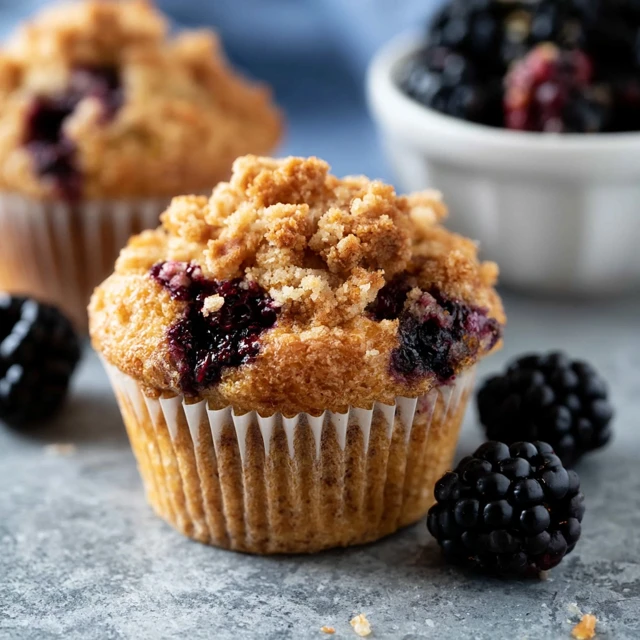
Crowd-Pleasing Blackberry Muffin Recipe for Camping
Ingredients
Method
- Prep your campfire or camp stove: Build a small fire and let it burn down to hot coals (no flames). If using a camp stove, set it to medium-low heat.
- In a medium bowl, whisk together the flour, sugar, baking powder, and salt.
- In a separate bowl, beat the egg, then stir in the milk, melted butter or oil, and vanilla.
- Pour the wet ingredients into the dry ingredients and stir just until combined—a few lumps are fine. Do not overmix.
- In a small bowl, toss the blackberries with the additional tablespoon of flour until lightly coated. Gently fold the floured berries into the batter.
- Cut six squares of heavy-duty aluminum foil, each about 8x8 inches. Lightly grease the center of each square with butter or oil.
- Divide the batter evenly among the foil squares, placing a generous spoonful in the center of each. Fold the foil into tight packets, leaving a little room at the top for the muffins to expand.
- Place the foil packets directly on the hot coals or on the grate over low heat. Cook for 18-22 minutes, rotating the packets halfway through. For a camp Dutch oven, arrange packets on the lid or a trivet inside the preheated oven and bake with 6-8 coals on top and 4-5 underneath for 20-25 minutes.
- Carefully open one packet to check doneness—a skewer inserted into the muffin should come out clean. Let the packets cool for 2-3 minutes before opening fully. Serve warm directly from the foil.