
The first time I pulled a perfectly caramelized pineapple upside down cake from a cast iron skillet at camp, I knew I’d found something special. The smell alone — brown sugar bubbling with butter, fresh pineapple softening into golden rings — draws everyone to the fire. And the best part? No oven required. Just a skillet, a lid, and a bed of coals.

This method works because it uses the same heat distribution principles that make Dutch oven baking so reliable. The cast iron holds steady heat, the lid traps steam, and the caramelized topping comes out glossy every time. Here’s how to do it without burning the bottom or ending up with a soggy middle.
Why Fresh Pineapple Matters
Canned pineapple works in a pinch, but fresh pineapple brings two advantages. First, it has less liquid, which means your topping won’t turn watery. Second, the natural acidity balances the sweetness of the brown sugar. Look for a pineapple that gives slightly when squeezed and smells sweet at the base. Peel it, core it, and slice into even rings about a quarter-inch thick. Too thin and they’ll dissolve; too thick and they won’t soften enough during baking.
Setting Up Your Heat Source
This cake bakes best over a bed of coals, not flames. If you’re cooking over a campfire, let it burn down until you have a uniform layer of glowing embers. Spread them into a circle slightly larger than your skillet. Place a metal grate or trivet about 4 to 6 inches above the coals. For a camp stove, set it to low-medium heat and use a heat diffuser if you have one — it prevents the bottom from scorching before the center sets.
The Lid Trick for Even Baking
Here’s the technique that makes this cake rise evenly: cover the skillet with a tight lid or heavy-duty aluminum foil, then place a few hot coals on top. This creates top heat, mimicking an oven’s surround-heat. Without it, the cake will dome and the edges will overcook before the center is done. If using foil, crimp it tightly around the skillet’s rim and use tongs to place coals on top. Check every 10 minutes and rotate the skillet a quarter turn to avoid hot spots.
Building the Topping Layer
Melt the butter in the cold skillet over low heat. Sprinkle the brown sugar evenly and stir until it forms a thick paste — don’t let it bubble hard or it will burn. Remove from heat immediately. Arrange the pineapple rings in a single layer. Place a cherry half in the center of each ring, cut side up. This is also the moment to add any extras: a sprinkle of toasted coconut or a few pecan halves tucked between rings works beautifully.
Mixing the Batter (Don’t Overthink It)
The batter is a simple vanilla cake — nothing fancy, but it needs to be sturdy enough to hold the weight of the topping. Whisk the dry ingredients together, then stir in the wet ingredients until just combined. Overmixing develops gluten, which makes the cake tough. A few lumps are fine. Pour the batter gently over the pineapple, spreading it to the edges without disturbing the fruit.
Baking and the Big Flip
Cover the skillet and bake for 30 to 35 minutes. Test doneness with a skewer or thin knife inserted into the center — it should come out clean. Let the cake rest for exactly 5 minutes after baking. This rest is critical: the caramel needs to set slightly, or it will run off when you flip. Place a flat plate or cutting board over the skillet, hold them together firmly, and invert in one smooth motion. Lift the skillet slowly. If any pineapple rings stick, just nudge them back into place with a spatula.
Adapting for Wind and Cold
Wind steals heat fast. On a breezy day, set up a windbreak using a cooler, a camp chair, or a tarp strung low. If the temperature drops below 50°F, expect the cake to take an extra 5 to 10 minutes. Keep the lid on and resist the urge to peek — every lift of the lid releases steam and extends the bake time.
This cake is best served warm, straight from the skillet. It keeps for a day in a sealed container, but the topping will soften. If you have leftovers, reheat slices in the skillet over low heat for a few minutes. The caramel re-liquefies, and the pineapple turns tender again.
Safety note: Always place your skillet on a stable, level surface. Use heat-resistant gloves or a sturdy pot holder when handling the hot skillet and lid. Never leave a cooking fire unattended, and fully extinguish coals with water and stir before leaving camp.
Frequently Asked Questions
Can I use canned pineapple instead of fresh for this camp cake?
Yes, you can substitute canned pineapple rings. Drain them well and pat dry with a paper towel to remove excess moisture, which can make the topping soggy. Fresh pineapple gives a brighter, less sweet flavor and holds its shape better during baking.
How do I keep the cake from burning on the bottom over a campfire?
Use a heat diffuser or a layer of coals rather than direct flames. Place the skillet on a grate set 4-6 inches above a bed of evenly spread coals. Rotate the skillet 90 degrees every 10 minutes to avoid hot spots. A camp stove on low with a diffuser also works well.
What if I don’t have a Dutch oven? Can I still make this cake?
Absolutely. A deep 10-inch cast iron skillet with a tight-fitting lid or a sheet of aluminum foil crimped tightly over the top works fine. The key is trapping steam to help the cake rise. If using foil, check that it doesn’t touch the cake surface.
How do I adjust the recipe for high altitude camping?
At altitudes above 3,000 feet, reduce the baking powder by 1/4 teaspoon and add an extra tablespoon of milk. Increase the oven or campfire temperature by 15°F and expect a slightly longer bake time. The cake may dome less, but the flavor will be fine.
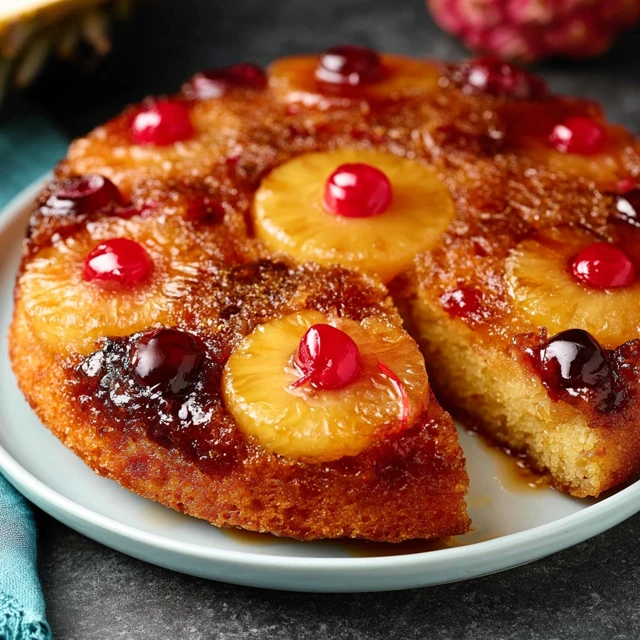
Fresh Pineapple Upside Down Cake at Camp: A Skillet Method That Works
Ingredients
Method
- Prepare your campfire or camp stove: If using a campfire, let it burn down to a bed of even, glowing coals (no flames). If using a camp stove, set it to low-medium heat. You'll need a stable grate or trivet that holds the skillet 4-6 inches above the heat source.
- In a 10-inch cast iron skillet over low heat (or a few coals), melt 1/4 cup butter. Once melted, sprinkle the brown sugar evenly over the butter. Stir gently with a wooden spoon until the sugar dissolves into a syrupy paste, about 1-2 minutes. Remove from heat.
- Arrange the fresh pineapple rings in a single layer over the brown sugar mixture, overlapping slightly if needed. Place a cherry half in the center of each ring, cut side up. Set the skillet aside.
- In a medium bowl, whisk together the flour, granulated sugar, baking powder, and salt. In a separate small bowl, whisk the milk, 1/4 cup melted butter, vanilla extract, and egg until smooth. Pour the wet ingredients into the dry and stir just until combined — a few lumps are fine. Do not overmix.
- Gently spoon the batter over the pineapple rings, spreading it evenly to the edges. The batter will be thick; that's normal.
- Cover the skillet tightly with a lid or a double layer of heavy-duty aluminum foil, crimped around the edges. Place the skillet on the grate over the coals or stove. If using a campfire, place a few coals on top of the lid (or foil) to create even top heat. This is the trick for even baking.
- Bake for 30-35 minutes, rotating the skillet 90 degrees every 10 minutes to prevent hot spots. The cake is done when a skewer inserted into the center comes out clean, and the top springs back to the touch. If the top is browning too fast, move the skillet to slightly cooler coals or reduce stove heat.
- Remove the skillet from heat. Let it rest for 5 minutes — this allows the caramel to set slightly. Place a large plate or cutting board over the skillet, then carefully invert the cake in one swift motion. Lift the skillet off. Replace any pineapple rings that stuck to the skillet. Serve warm or at room temperature.